Written by Emma Crichton-Miller
What unites the seemingly disparate artworks in this exhibition is that they arise from compulsion. There was no need for any of these individuals to make art. They have had flourishing careers in fields as diverse as the prison service and fashion, product design and medicine. And yet the art came, it insisted. The pieces you see here, whether paintings or sculptures, prints or ceramics, arrive with a particular urgency, from people who have engaged with life on quite different terms from those of traditional artists. While the works share a common energy, each remains distinct. This is not a show of leisure pursuits. Each artist makes work through the lens of their own professional experience and expertise, demanding as much of themselves in this new mode of expression as they once did when exploring theoretical physics or making a documentary film. While in some sense this is all simply art, like any other art, to be approached under the sole criterion of whether it works or not, there is a specificity to each person’s focus that is particularly compelling, driven by previous life choices, which emerges in very different ways for each artist.
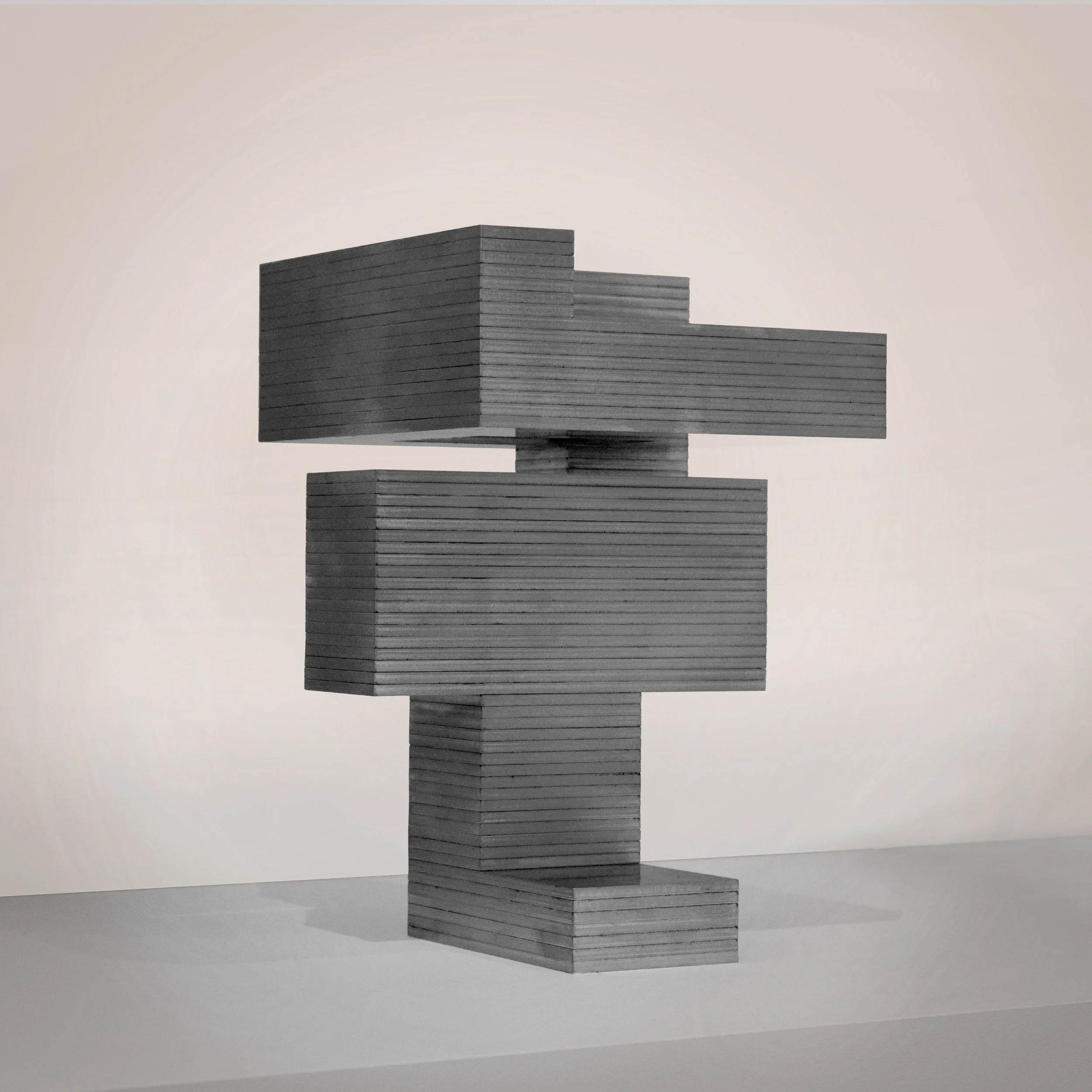
“I had said I had always wanted to do some etching. He showed me a blind-embossed print he had made for [Eduardo] Paolozzi.”
Matthew Hilton on his collaboration with the master printer Nigel Oxley.
You can see this clearly in the work of Matthew Hilton. A renowned designer, in 2023 he astonished admirers by showing a collection of sculptures at Paul Smith’s gallery space in Albemarle Street, London. Inspired by a lifetime’s engagement with industrial production, and the machines and metals that enable it, these abstract totems summoned memories of factory machinery, shaped by a sensibility attuned to twentieth-century abstract sculpture. Here, his sculptures are accompanied by prints, including blind- embossed works. Hilton has collaborated with the master printer Nigel Oxley: “I had said I had always wanted to do some etching. He showed me a blind-embossed print he had made for [Eduardo] Paolozzi.” Blind embossing allows Hilton to explore a very thin 3D plane, somewhere between 2D and 3D, sharpening further his exploration of form, shadow and perspective. He says, “The big thing for me was that it was a broadening of my practice as an artist.”
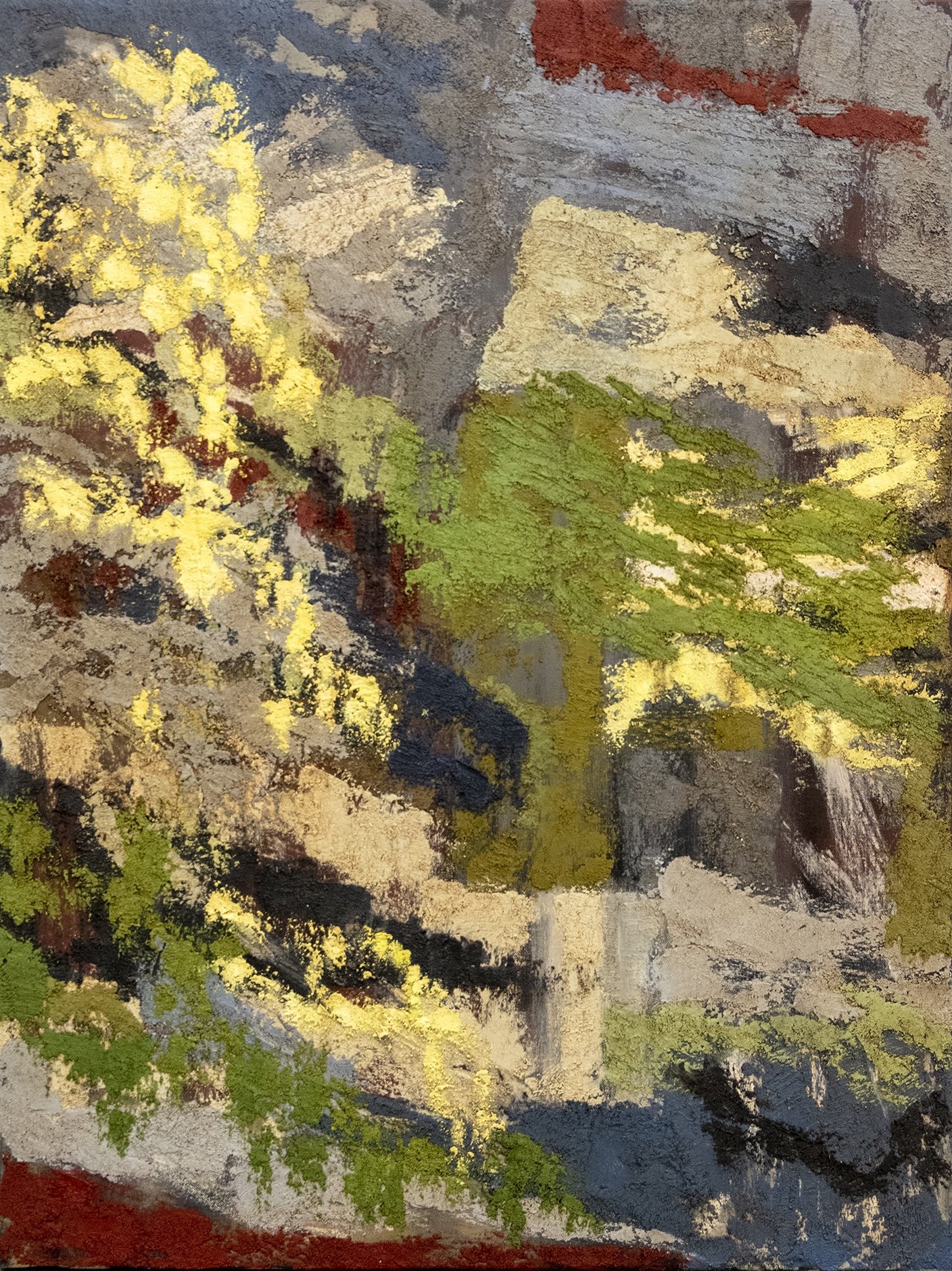
Miguel Sopena’s vivid, multi-layered abstract oil paintings might seem a world away from his first discipline as a theoretical physicist, but, Sopena suggests, you need the same degree of intense concentration to resolve an abstract painting as to solve a complex mathematical problem. He began a part-time foundation course while finishing his PhD, when, as he puts it, “something woke up.” Although he then trained as a figurative artist, it is both the freedom and the discipline of abstraction that currently draw him. The charged palette and careful layering, the highly textured surfaces and broken geometries convey a sense of struggle and release, a working out in painterly terms of complex emotions.
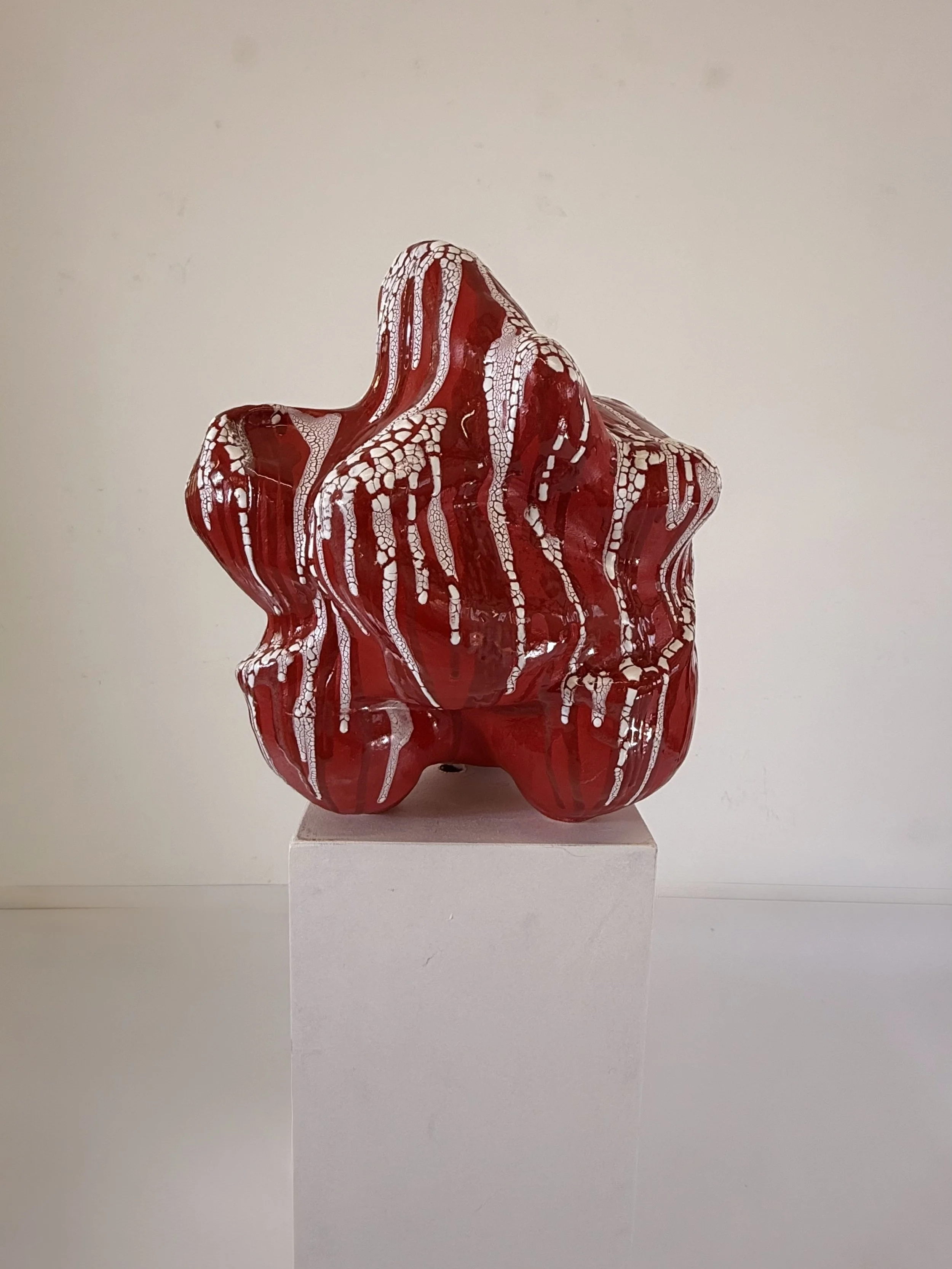
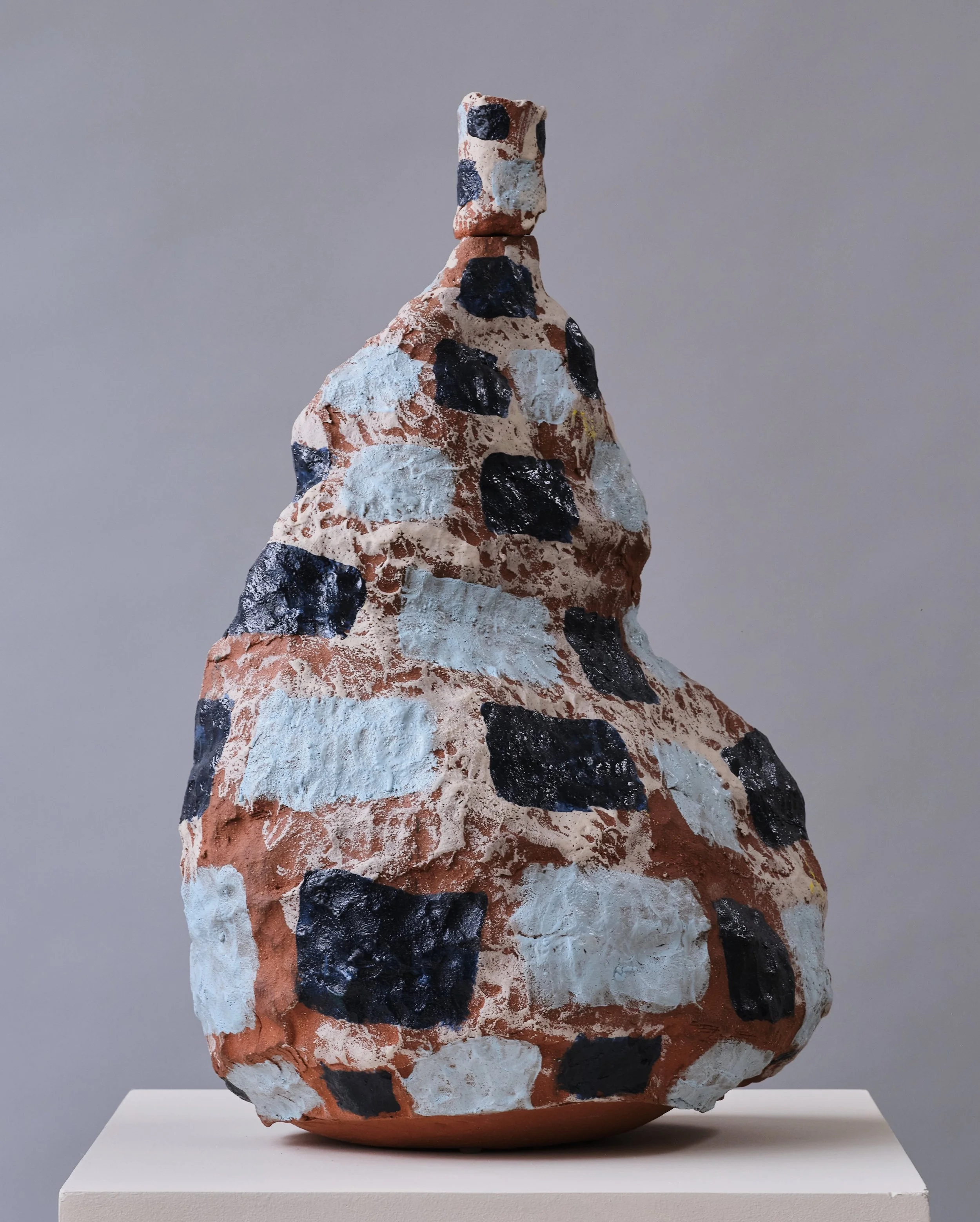
Jane Preston’s organic, spiky ceramic sculptures also suggest a bold yet controlled outpouring of imagination and feeling. Preston’s career as an award-winning film-maker and journalist often involved fifteen-hour days. For the last year, she has focused full time on her ceramics, winning a studio space at the Sarabande Foundation. Memories from her childhood along the beaches of southern England and in the New Forest have surfaced through her hands in these expressive, yet defensive, intensely felt pieces.
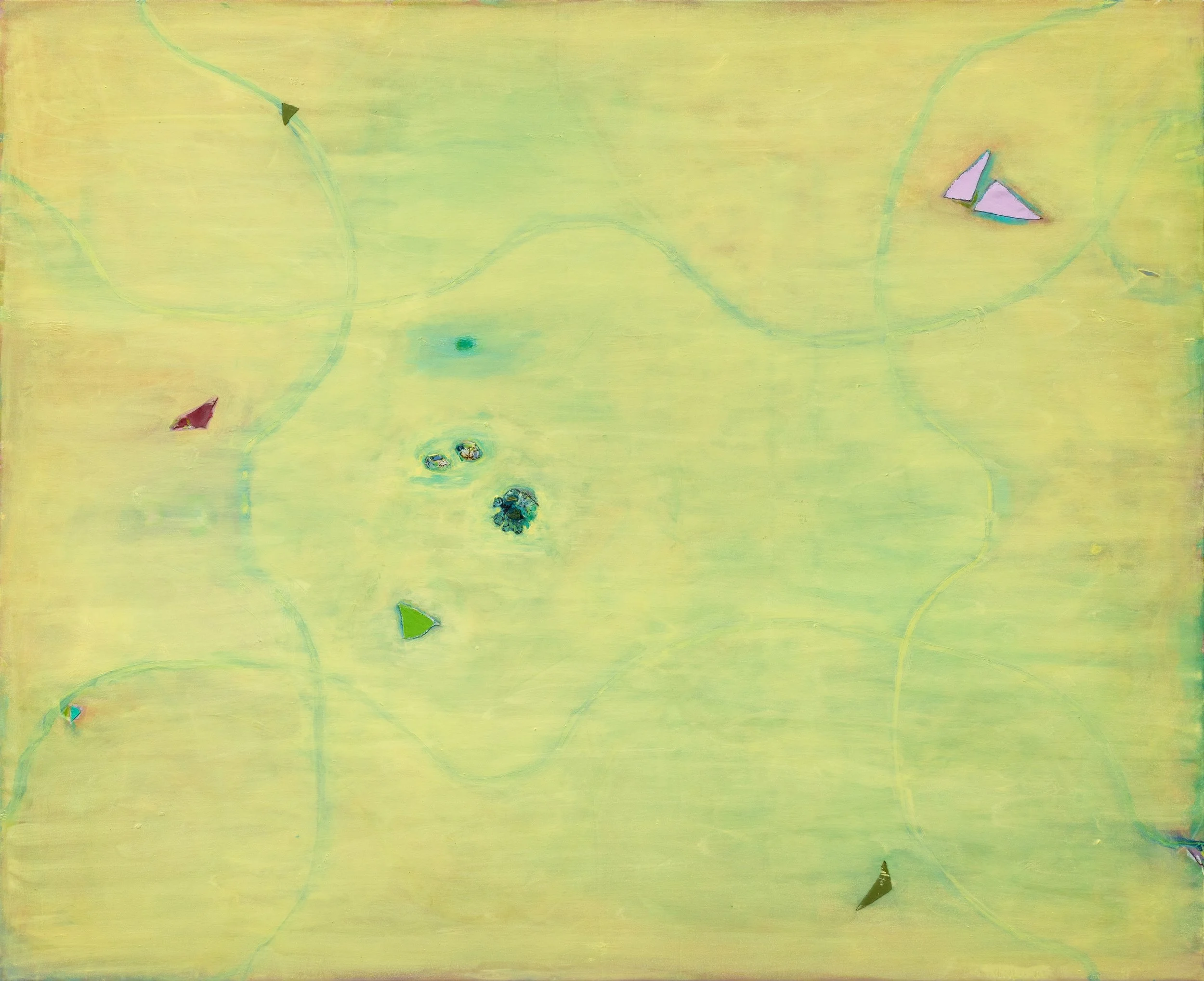
Childhood experience of nature is equally fundamental to Gina Beaton’s work. Born and brought up on windswept Orkney, with its vast skies and seas, she has spent many years working in the justice system. Her teenage resolve to foster self-determination in the face of imprisonment motivated her decision to read law, and to make the prison service her career. Yet Beaton was always painting. A year ago, she embarked on a full-time MFA at City & Guilds of London Art School. Her spacious paintings, experimentally conjured through a playful process, are about bringing the nature and light of Orkney onto the canvas. Beaton had thought of painting as a release from her day job, but she now realises that it runs alongside her commitment to keep hope alive for people in prison.
Isis Dove-Edwin’s ceramic practice, which has evolved through Central Saint Martins and the Royal College of Art, has grown from a pursuit of unresolved technical and creative questions into a way of exploring “where I am in the world.” Originally a medical doctor, fulfilling her childhood dream, Dove-Edwin has found a different satisfaction building pots using traditional West African hand-building techniques. Through these methods, she explores her own diasporic family history as well as larger questions of cultural politics: how functional hand-built terracotta vessels, made communally in the Caribbean and West Africa, came to be placed in the ethnographic departments of Western museums. Her asymmetric, thickly pigmented vessels, diverging radically from their ancestral form, are expressions of her own life, yet are linked back through a chain of physically grounded practice to myriad other women and communities.
Katya Granova’s paintings also offer a reflection of her place in the world. Her first degree, in psychology at St Petersburg University, introduced her to existentialism and social psychology. Painting, which she had always pursued for pleasure, seemed increasingly a way to approach complex emotions and psychological states. Having abandoned psychology for fine art, she began at the RCA, as a way of addressing her own sense of foreignness, to work from photographs of her family and other families in Russia, summoning what she calls “forever-gone time” through her gestural painting. The recent works translate their black-and-white British archive sources into a heightened, high-keyed palette. Their febrile, emergent compositions reflect the heat of Granova’s psychological and emotional engagement with these unknown people, as she questions her own connection with them.
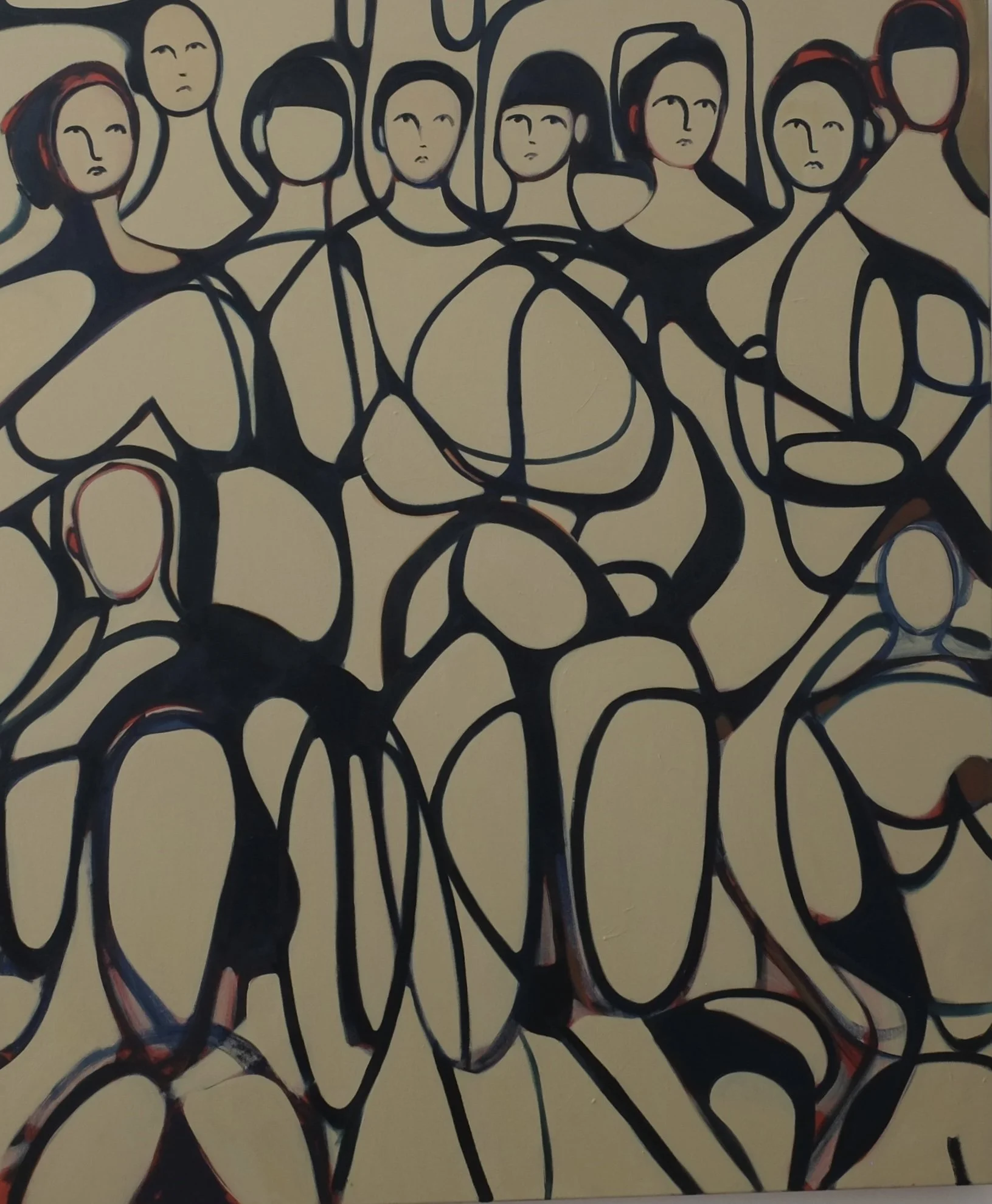
Sophie Bayntun is also inspired by groups of people – especially women – whom she creates in swirling, polychrome compositions, governed by a fluid line, geometry and rhythm. A chef by training, Bayntun is self-taught and, as she says, draws her ideas “from my head”. In the unfurling of these highly varied pictures – some abstracted – memories and dreams surface, taking shape on the canvas, almost as in a dance.
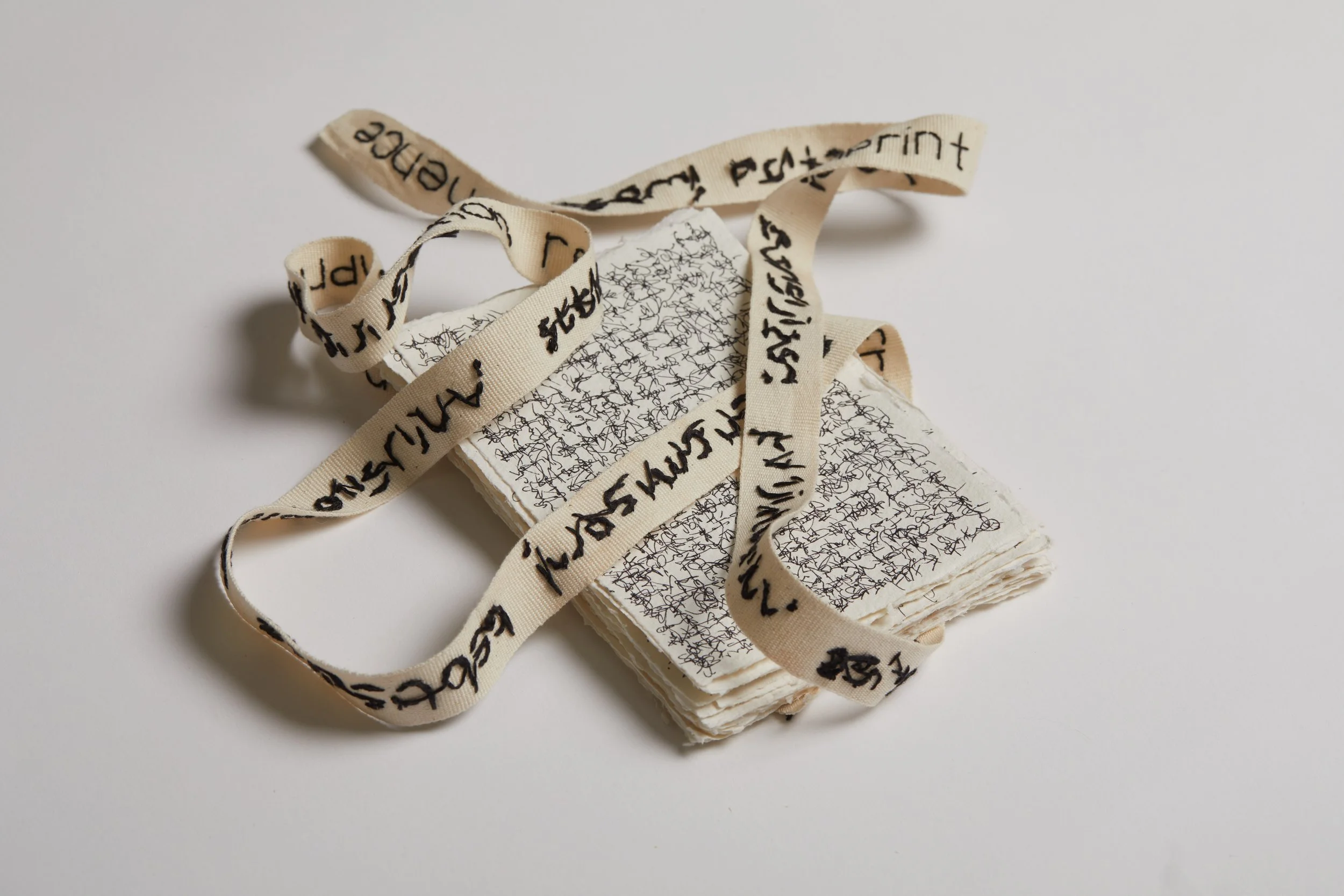
For Arabella Greenhill, whose long career as a fashion director instilled a confident editorial eye and a love of stories, ceramics and embroidery have also offered a means to bring the unexpressed to the surface. Her piece I Am Fine, How Are You? – a notebook- sized oblong made from multiple very fine layers of white porcelain, into which the phrase has been typed, over and over, so as to be barely legible – represents for Greenhill the way the English smother their pain beneath sunny politeness. It is both bold and diffident, impassive and fragile. Her 2025 City Lit diploma introduced her to journalling, paper and embroidery, through which the tension between wanting to write and not quite wanting to be read plays out in her mixed-media pieces.
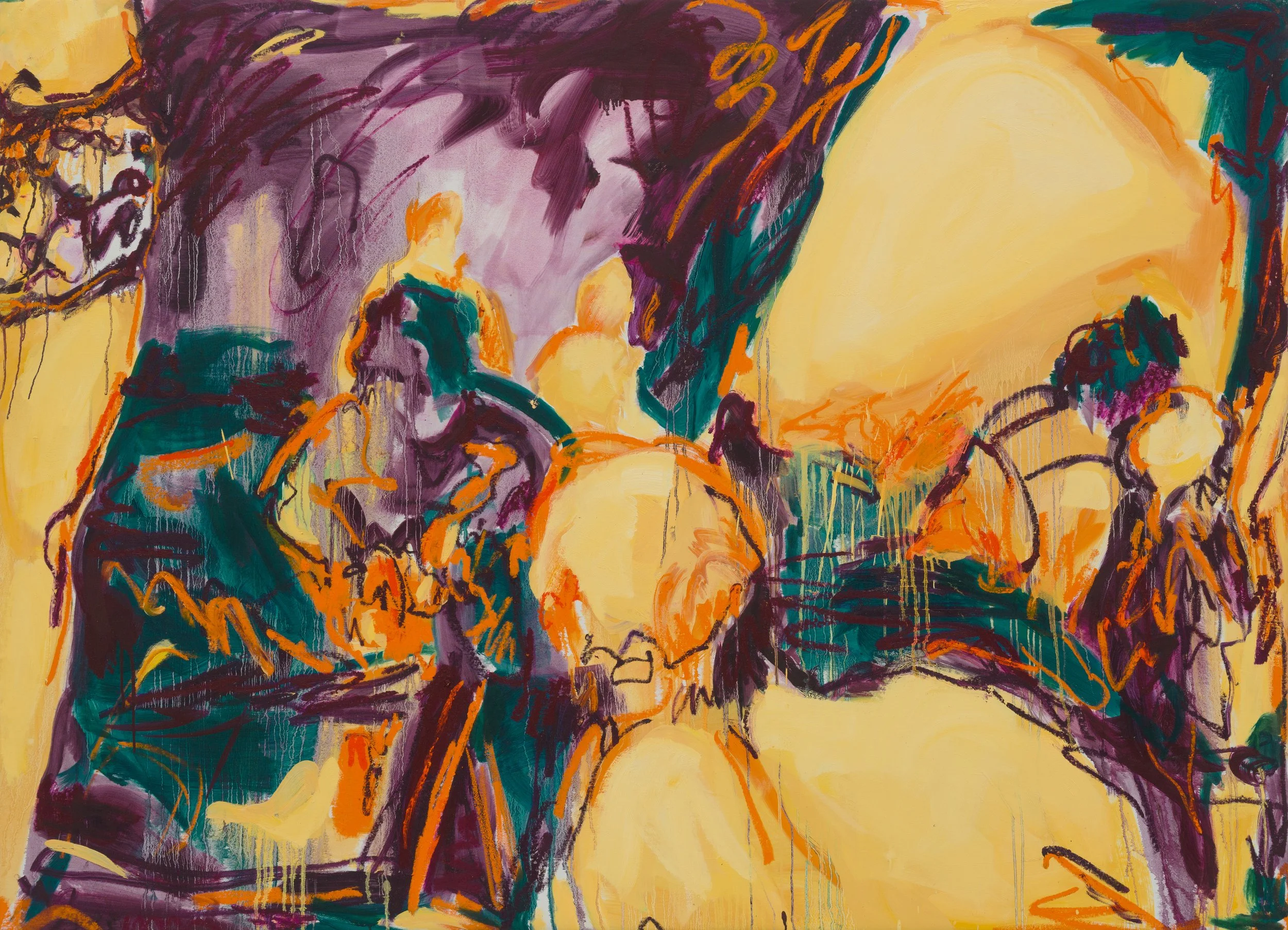
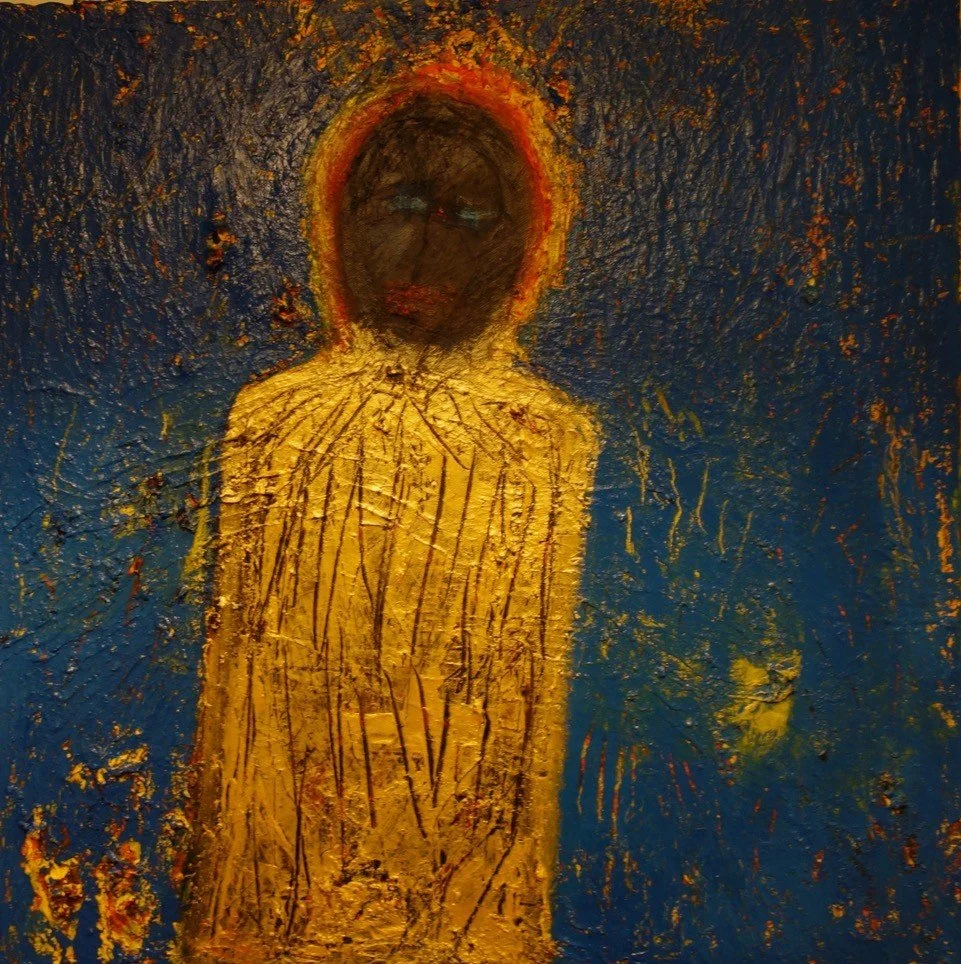
Finding a way to express political anger has been the motivating energy behind Joseph Barry’s work for many years. A secondary school teacher of English and film, he long made collaged works from cut-up photographic images, with a rough, punk aesthetic, before deciding to take the plunge. Two years at City Lit shifted his focus to painting. Through the time-intensive process of building his paintings – using different paints, crayon, pastel, charcoal and pencil alongside found materials – layering them up and then scraping them back down, the polemic has become more ambiguous, though no less pungent. More than that, the bleakness of his vision has been both sharpened and offset by strong colours and textures, not masking the pain but deepening its resonance and finding a compensating potential for beauty.
In all, these artists reveal how, through commitment to an artistic practice, aspects of the self, long sidelined in pursuit of a career, are able to surface. Whether these are childhood memories of nature, anger at injustice, or an emotional sensitivity not helpful in a scientific or highly charged work environment, the art, accomplished with seriousness and a refusal of sentimentality, emerges all the stronger for the wait, for the maturing of the need. For some, the making leads deeply inside. For others, it offers a way out, to connect with wider stories. For some, the use of abstraction enables a more satisfying exploration of difficult themes. For others, it is through materials – paint, metals, clay, textile – that ideas and feelings are articulated. For the viewer, it is this hard-won wrestling with self and material that gives the works their richness and depth.